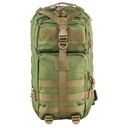
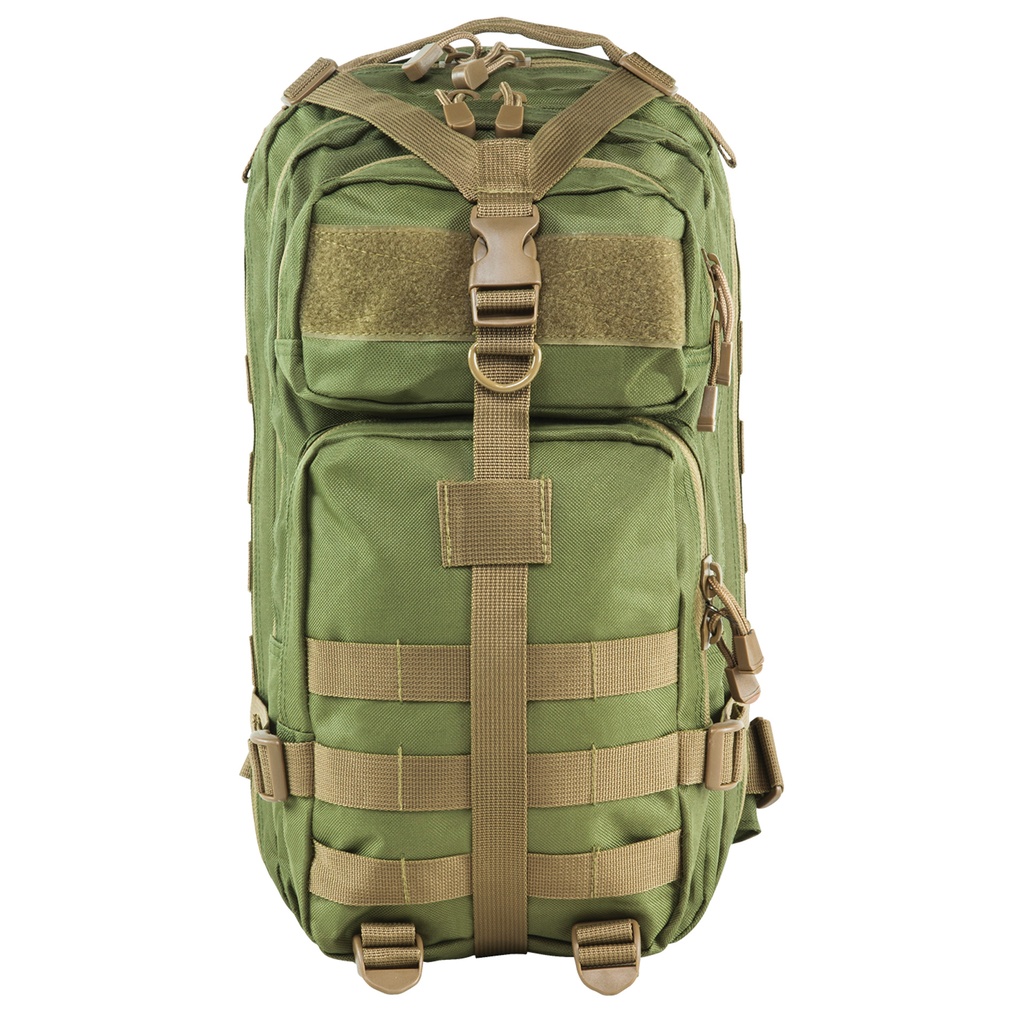
Ranger Scout Field-Ready Tactical Backpack - Green/Tan
13 sold in last 24 hours
This isn’t a fashion backpack. It’s a compact tactical pack built to ride close and work hard. The Ranger Scout field-ready backpack gives you a 17 x 8.75 x 4.5 main compartment, dual front pockets, full MOLLE grid, and compression from every side to keep the load tight and quiet. Heavy-duty zippers, reinforced stitching, sternum and waist straps, and a green/tan build that belongs in the field—not on a billboard.
Ranger Scout Tactical Backpack Built to Work, Not Pose
The Ranger Scout Field-Ready Tactical Backpack is a compact daypack for people who actually use their gear. No neon trim, no gimmicks. You get a tight 17 x 8.75 x 4.5 main compartment, real MOLLE webbing, and full compression from top, sides, and bottom so the pack rides close, quiet, and controlled. Green body, tan webbing, and hardware—this is an outdoor and duty-first pack, not a commuter fashion piece.
Compact Tactical Backpack for Everyday and Field Use
This pack is built around a straightforward idea: carry what you need, keep it locked down, and stay mobile. At roughly 17 inches tall, it sits in that sweet spot where it works as an everyday tactical backpack, a day hike pack, or a range bag without turning into a bulky rucksack.
The main compartment anchors the load, deep enough for layers, gloves, and a kit, but narrow enough to keep your center of gravity close. Internal organization keeps smaller gear from vanishing into the bottom. Dual front zip pockets stack vertically, giving you fast-access space for tools, notebooks, first-aid, or whatever you actually carry when you’re not sitting behind a desk.
Why This Tactical Backpack Punches Above Its Size
The Ranger Scout looks compact, but once you start loading it, the design shows its hand. The compression system—top strap, side straps, and bottom tensioning—lets you cinch the pack down so it doesn’t swing, flop, or drum against your back.
- Main compartment: 17 x 8.75 x 4.5 inches, rectangular, efficient volume
- Front pockets: Two stacked zip pockets for staged organization
- Carry control: Sternum strap and waist strap to lock the pack to your frame
- Attachment points: MOLLE on front and sides, bottom loops, and D-ring
- Profile: Close-riding, compact, built to stay tight to your back
If you’re climbing over deadfall, ducking through brush, or moving through tight spaces, the difference between a loose, sagging pack and a compressed one is the difference between clean movement and constant irritation. This one stays put.
Build Quality: Materials and Construction That Actually Matter
A tactical backpack lives or dies on material and stitching. The Ranger Scout is built from rugged green body fabric with reinforced tan webbing at all the stress points. That means the grab handle, compression straps, and MOLLE attachment zones are backed by heavy, reliable stitching instead of marketing copy.
Fabric, Webbing, and Hardware Details
The body fabric is a tough, abrasion-resistant weave designed to survive concrete, tree bark, and the inside of a truck bed. The tan webbing isn’t just color contrast—it's load-bearing structure that ties the bag together when fully packed and cinched down.
- Reinforced stitching at load points and strap anchors
- Heavy-duty zippers with dual pulls and fabric tabs for gloved use
- Side-release buckles sized for real tension, not decoration
- Loop-field patch panel on the upper pocket for ID or unit patches
Nothing here is ornamental. If you see webbing or hardware on this pack, it does a job.
MOLLE Layout and Real-World Use
The MOLLE grid on the lower front pocket and both sides gives you honest expansion options. You can mount pouches for medical, tools, mags, or whatever niche kit you don’t want buried in the main compartment. Side MOLLE lets you run narrow pouches without widening the pack profile too much, which matters in tight brush or vehicles.
Bottom attachment points with buckles let you lash on a light jacket, tarp, or bedroll without stealing internal volume. The front D-ring on the upper strap adds a quick clip point for gloves, carabiners, or an ID lanyard.
Field-Ready Comfort and Control
A pack can be built like a tank and still be useless if it carries badly. The Ranger Scout is designed to ride close to your spine so the weight moves with you, not against you.
- Sternum strap: Pulls the shoulder straps inward, stabilizing the load when you’re moving fast or under weight.
- Waist strap: Keeps the lower half of the pack from swinging and slapping against your back.
- Top carry handle: Double-layer tan webbing makes grabbing, hanging, or dragging the pack simple and secure.
This is the kind of pack you can throw on, cinch down, and forget about while you focus on what actually matters in front of you.
Green/Tan Tactical Aesthetic with a Purpose
The green and tan color scheme isn’t an accident. Olive green body and tan webbing are standard in modern field gear for a reason: they blend into woods, scrub, and dirt, and they don’t scream for attention. In a rack of loud urban bags, this one reads as what it is—tactical, outdoors, and job-focused.
The rectangular front layout with the central strap and evenly spaced pockets gives the pack a calm, ordered look that matches its function. It looks squared away because it carries squared away.
Questions About Brass Knuckles For Sale
Are brass knuckles legal to buy?
Legality depends on your state. Some states allow brass knuckles to be owned, carried, and purchased without much hassle. Others allow possession but restrict carry, and a handful ban them outright or treat them as prohibited weapons. If you’re shopping brass knuckles for sale, you check your state and local law—penal code or weapons statute—and you don’t guess. Adults who buy these pieces treat the legal side the same way they treat materials and build: they know exactly where they stand before they swipe a card.
What material are quality brass knuckles made from?
Serious buyers look for solid metals, not toy-grade junk. Traditional and collector-grade pieces are often solid brass—dense, corrosion-resistant, and with a weight in the hand that cheap cast alloys can’t touch. Others go for steel or aluminum alloys: steel for maximum strength and longevity, aluminum for lighter carry and reduced printing in a pocket. Coatings and finishes can range from bare metal to black oxide, stonewashed, or anodized, but the core rule is simple: real brass knuckles start with real metal.
What should I look for when buying brass knuckles?
If you’re hunting for the best brass knuckles for sale, you look past the flash. You check material first—solid brass, steel, or quality alloy. Then you look at machining: clean edges, consistent curves, no casting voids, no rattling parts. Finger holes should be sized right for an adult hand, not toy small, and the profile should sit comfortably without digging in. Collectors also care about finish, design lineage, and whether the piece nods to historical patterns or brings something new. And through all of that, you stay aware of your state’s laws so your collection stays on the right side of the line.
Ready to Add a Real Pack to a Serious Kit
If you’re the kind of buyer who checks materials, stitching, and layout before you buy, the Ranger Scout Field-Ready Tactical Backpack belongs in your lineup. It’s compact, MOLLE-ready, and built to haul what matters without drama. Pair it with the rest of your gear—tools, knives, brass knuckles, whatever you run—and it will do its job quietly, day after day.
No theatrics, no over-designed panels, just a green/tan tactical backpack that owns its purpose and holds up under real use.