Shadow Control Disable-Pin Stun Gun - Black
12 sold in last 24 hours
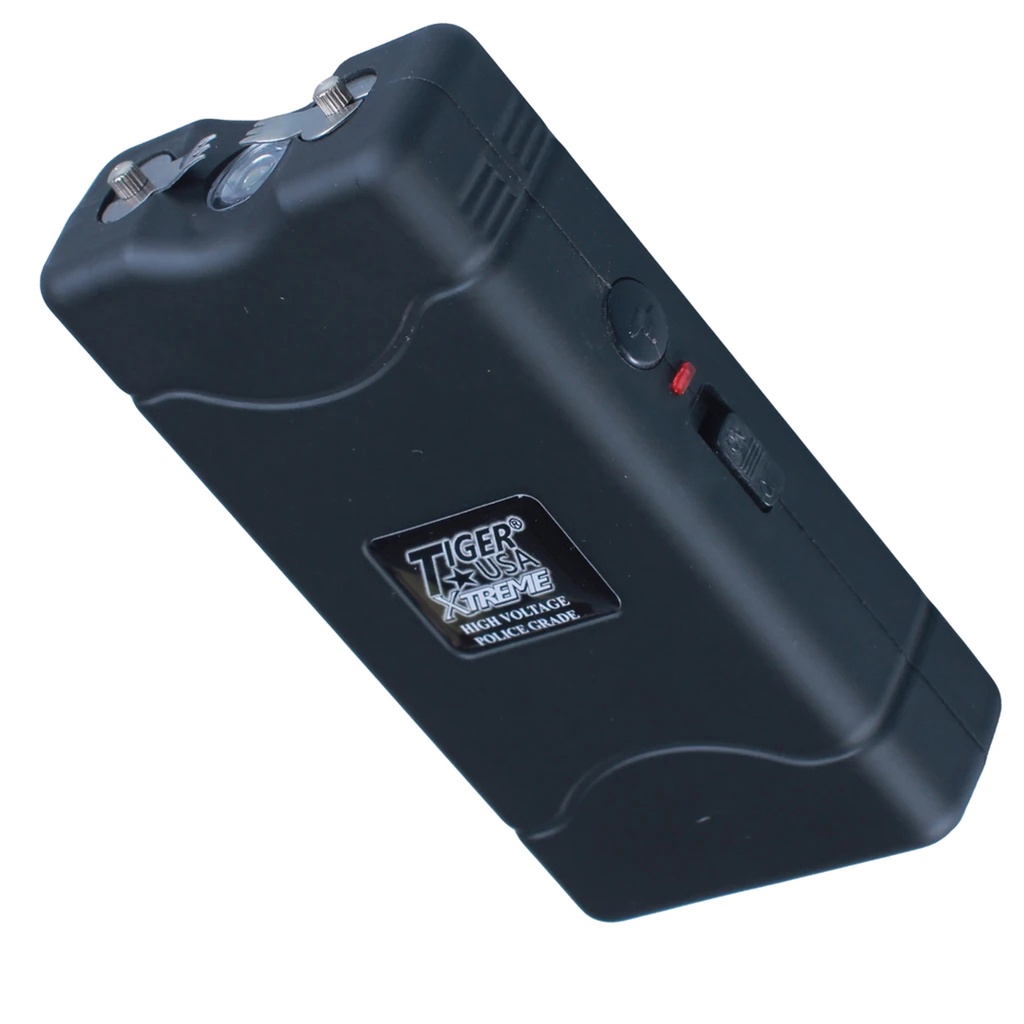
The PulseGuard Disable-Pin Stun Gun doesn’t play around. This compact black unit pairs a bright forward-facing flashlight with a wrist-strap disable pin that kills the power the second it’s yanked from your hand. A red armed indicator tells you it’s live; one press delivers 96 million volts on demand. Pocket-sized, squared-off, and easy to grip, it’s built for real-world carry—late-night walks, parking lots, or behind the counter when you want the odds back in your favor.
PulseGuard Disable-Pin Stun Gun – Built For When Things Get Ugly
The PulseGuard Disable-Pin Stun Gun is exactly what a self-defense tool should be: compact, bluntly powerful, and under your control. Matte black body, forward-facing flashlight, twin contact points, and a wrist-strap disable pin that cuts power if someone manages to rip it away. No gimmicks. No circus lights. Just a hard-hitting, 96-million-volt stun gun shaped to sit in your hand and stay there when the night gets loud.
Stun Gun Power You Can Actually Use
This isn’t a toy and it doesn’t pretend to be. The PulseGuard Disable-Pin Stun Gun puts 96 million volts on tap behind two exposed front prongs—right where you expect them. You’re not fumbling for side contacts or odd angles. Point, press, and you’ve got instant, aggressive persuasion at arm’s length.
The forward-facing flashlight isn’t decoration. It lets you see what’s in front of you in a dark parking lot or hallway, while keeping the business end exactly where it needs to be. Light and contact in one straight line is how a serious stun gun should be built.
Front-Facing Flashlight, Front-Facing Force
Plenty of stun guns bolt a light on as an afterthought. PulseGuard puts the flashlight lens dead center between the contacts. That means when you light something up, you’re already on target if you decide to hit the switch. No guesswork, no re-aiming. In a jumpy moment, that alignment matters more than any marketing adjective.
Disable Pin That Actually Protects You
The wrist-strap disable pin is simple: it’s seated in the body when the stun gun is in your hand. If someone grabs it and wrenches it away, the pin pulls free and the power dies. You just removed your own tool from the fight instead of handing it to the person trying to hurt you. That’s the whole point of a disable-pin stun gun—control follows your wrist, not the device.
Compact Build, Serious Intent
The PulseGuard Disable-Pin Stun Gun is built like a small black brick with softened edges—rectangular, deliberate, and easy to index in your grip without looking. The housing is a single-piece molded body with minimal seams, so it feels solid instead of rattly. Subtle side contours give your fingers a natural landing place, and the control layout is stripped down to what matters: a textured slider and a firing button.
Tactical Matte Black Finish
No chrome circus, no bright plastic toy colors. The matte black finish keeps reflections down and attention away. It disappears into a pocket, bag, or under the counter until you decide to show it. A small red armed indicator is the only color that matters: when it’s lit, the stun gun is live and ready.
Everyday Carry Size
Full power doesn’t require a brick on your belt. The compact rectangular form is sized for a jacket pocket, purse, or small bag without weighing you down. Square enough not to roll, smooth enough to draw cleanly, and shaped to fill the palm without printing like a pistol. It’s the kind of stun gun you actually carry instead of leaving in a drawer.
Why A Disable-Pin Stun Gun Matters
Anyone can sell you a device that makes noise and sparks. PulseGuard goes a step further: it assumes the situation could get physical and builds around that. The wrist-strap disable pin is about one thing—refusing to arm the person attacking you.
If they manage to snatch the stun gun from your hand, the strap yanks the pin out. Without the pin seated, the circuitry is dead. They’re left holding a black rectangle with no bite while you create distance, yell, run, or reach for your next option. That’s not a gimmick; that’s real-world design.
Legal Context: Stun Guns And Where They Fit
Stun guns like the PulseGuard Disable-Pin Stun Gun are treated as legal self-defense tools in most U.S. states, with some local restrictions and conditions. You’re not buying a firearm; you’re buying a compact electronic defense device that many jurisdictions treat more like a defensive tool than a weapon.
Some states and cities restrict stun gun possession, require you to be over 18, or limit carry in certain locations like schools or government buildings. A handful of areas have special rules or outright bans written into local code. Laws move, courts weigh in, and legislators revise language, but the general pattern is clear: in much of the country, adults can legally own and carry a stun gun for self-defense.
The smart move is basic due diligence—know your state and local rules before you carry. That’s not fear; that’s just staying one step ahead and making sure the tool in your pocket lines up with the law where you live and work.
Questions About Brass Knuckles For Sale
Are brass knuckles legal to buy?
In the U.S., brass knuckles sit under state and sometimes city law, not one blanket federal rule. In some states, brass knuckles are legal to buy, own, and in some cases carry. In others, they’re restricted, treated as prohibited weapons, or only allowed as collectibles kept at home. A few jurisdictions lump metal knuckles, sap gloves, and similar gear into the same category.
If you’re hunting for brass knuckles for sale, check the current law in your state and city—penal codes, weapons statutes, and local ordinances. Adults in states where brass knuckles are legal can usually buy them online as collector pieces or self-defense tools, but the burden is on you to match your purchase and carry habits to your local rules.
What material are quality brass knuckles made from?
Serious buyers look for solid metals. Classic pieces are solid brass knuckles, prized for weight, patina, and the way they age in a collection. You’ll also see steel brass knuckles—heavier-duty, often slimmer for the same strength—and aluminum versions that trade some weight for easier carry. Cast zinc and cheap pot metal exist, but collectors know the difference the second they pick them up.
Quality brass knuckles usually have clean casting, smooth radiused edges where the fingers sit, and a consistent finish—polished, brushed, or coated. No seams, no voids, no sharp slag inside the finger holes. Material and finish are what separate a real piece from flea-market junk.
What should I look for when buying brass knuckles?
If you’re buying brass knuckles, start with three things: legality in your state, material, and machining. Make sure brass knuckles for sale can actually ship to you. Then, choose solid brass, steel, or high-grade aluminum if you care about feel and longevity. Check the profile and ergonomics—the spacing of the finger holes, the palm swell, and the overall thickness.
Collectors also look at finish quality and design details: engraved patterns, historical shapes, trench-style influences, or minimalist modern cuts. Weight should feel deliberate in the hand, not hollow or toy-like. And always buy from a source that treats brass knuckles like real gear, not novelty junk—that’s where you’ll find the pieces worth owning.
Carry With Intent, Not Illusion
The PulseGuard Disable-Pin Stun Gun exists for one reason: to give you a hard, immediate answer when a situation turns sideways. Compact, matte black, 96 million volts, front-facing light, and a disable pin that refuses to arm your attacker. It’s the self-defense equivalent of a straight answer—no fluff, no apology.
If you’re the kind of buyer who reads specs, understands the difference between a real tool and a toy, and expects your gear to do exactly what it claims, this stun gun belongs in your rotation. And when you’re ready to look beyond electronics and into metal, the same mindset applies: seek out brass knuckles for sale from sellers who respect the product and the buyer. Tools are tools. You decide how seriously you take them.