Legionnaire’s Edge Medieval Roman Dagger - Black Steel
3 sold in last 24 hours
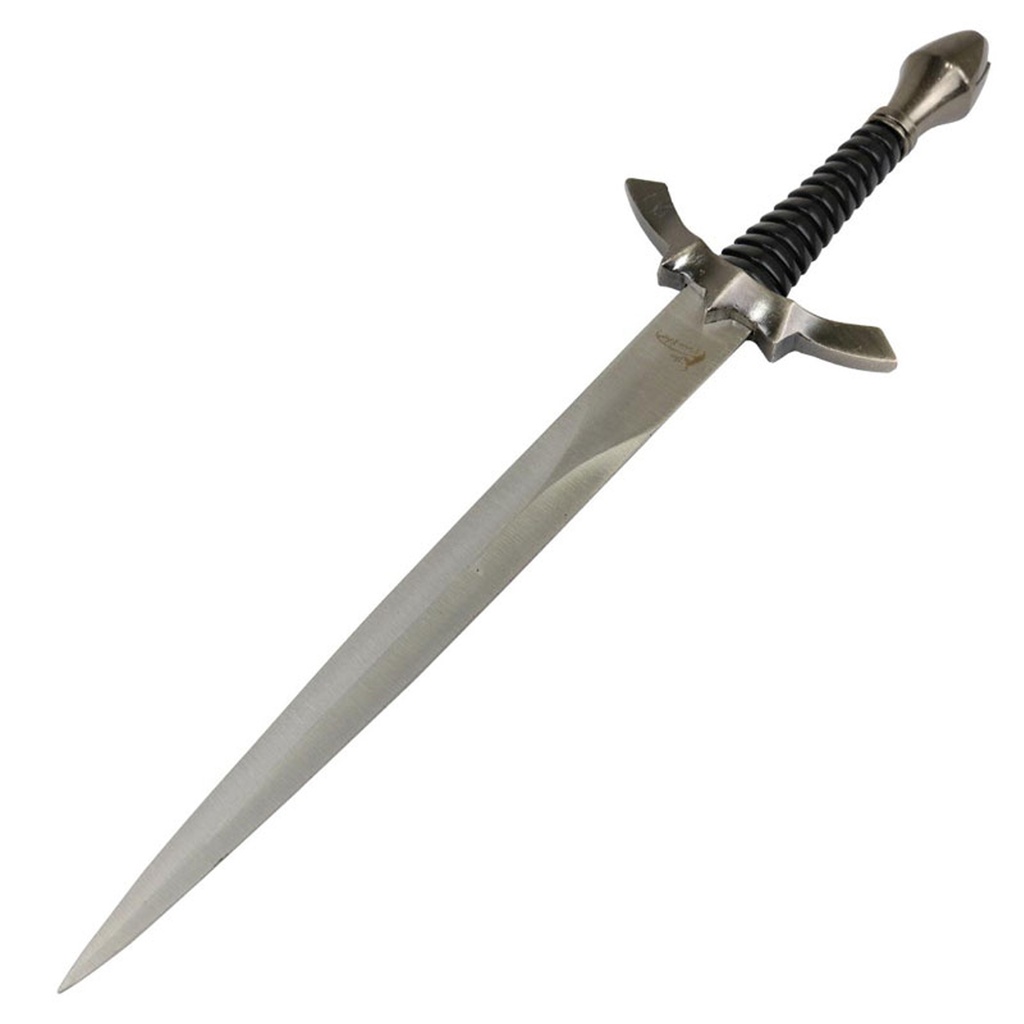
This Legionnaire’s Edge Medieval Roman Dagger is built for collectors who want steel in hand, not just a picture on the wall. An 8" double-edged satin blade, 5" metal handle with a black ribbed grip, and solid metal pommel deliver a true historical sidearm feel. The fitted scabbard completes the Roman profile and makes it display-ready. No fantasy fluff here — just a straightforward medieval dagger that looks and handles like a proper belt weapon.
Medieval Roman Dagger Knife Built Like a Real Sidearm
The Legionnaire’s Edge Medieval Roman Dagger is exactly what it looks like: a compact, steel fixed blade patterned after the kind of sidearm a soldier or guard would actually carry. You get an 8-inch double-edged dagger blade, a 5-inch metal handle with a black ribbed grip, and a solid metal pommel, all riding in a fitted scabbard. It’s a straightforward historical dagger for buyers who prefer steel in hand over costume-grade plastic.
Fixed Blade Dagger for Buyers Who Want Real Steel
This isn’t a folder, a toy, or a half-knife pretending to be medieval. It’s a full 13-inch fixed blade dagger with a central ridge, symmetrical point, and proper crossguard. The proportions are right where they should be for a Roman or medieval-style belt weapon: long enough to matter, compact enough to carry.
The double-edged design makes it a true dagger, not a generic knife with a point. The satin-finished steel blade runs clean from guard to tip, with no gimmicks, no fantasy cutouts, and no nonsense. It’s the kind of profile collectors recognize immediately as rooted in historical sidearms, not mall-ninja artwork.
Build Quality: Steel Blade, Metal Handle, Working Scabbard
Collectors care about what a historical dagger is made from and how it feels in hand. This piece is built on that simple premise: steel blade, metal hardware, working scabbard.
Steel Dagger Blade with Satin Finish
The 8-inch double-edged steel blade carries a satin finish that suits a Roman-inspired dagger. No mirror polish chasing fingerprints, no cheap coatings trying to look tactical. Just bare, honest steel with a central spine that stiffens the blade and keeps the point tracking straight.
The dagger grind and symmetrical spear-point profile give it a clean thrusting geometry, exactly what you’d expect from a historical or medieval-style dagger used as a close-in sidearm. It looks right in a display rack and feels right when you draw it from the scabbard.
Metal Handle, Black Ribbed Grip, Solid Pommel
The 5-inch handle is metal from guard to pommel, with a black ribbed grip section that locks into the hand. It doesn’t try to be ornamental; it tries to be practical. The ribbing gives traction, the straight profile gives control, and the metal pommel caps it with enough weight to balance the blade.
The crossguard is simple and functional, exactly what you’d expect on a medieval or Roman dagger: enough to keep the hand off the edge, not so oversized that it turns into a costume piece. On the wall, it reads as historical. In the hand, it reads as a working belt dagger.
Historical and Display Value for Medieval & Roman Collectors
This Medieval Roman Dagger sits in a good middle ground: faithful enough to historical lines to satisfy a serious display, accessible enough for anyone building out a Roman, guard, or medieval weapons set on a budget.
The scabbard gives you proper carry and display options. On a belt, it completes a Roman or medieval-inspired kit. On a wall, it gives you the full silhouette: blade hidden, hilt and pommel ready to catch the eye. You’re not just buying a bare blade; you’re getting the full sidearm profile as it was meant to be carried.
For reenactors, stage use, cosplay, or just a straight medieval weapons rack, this dagger holds its own. It has the essential cues: double-edged blade, center ridge, crossguard, black grip, and metal pommel. The look is immediately recognizable and doesn’t need explanation to anyone who knows their way around historical sidearms.
Legal Context: A Historical Fixed Blade Knife, Not a Restricted Gimmick
This Legionnaire’s Edge piece is a fixed blade knife with a double-edged dagger profile and a scabbard. It’s sold as a historical and display dagger, plain and simple. In most states, a fixed blade knife like this is legal to own in your home and add to your collection, but carry rules and local ordinances are a different conversation entirely.
Some states and cities draw lines around blade length, double edges, or public carry. Others don’t care what’s in your display case but have opinions about what rides on your belt. If you’re the kind of buyer picking up medieval or Roman daggers, you’re also the kind of adult who can check your local statutes or talk to a local attorney if you’re planning to carry. As a collectible or display dagger, this knife fits right in where historical blades are allowed.
Questions About Brass Knuckles For Sale
Are brass knuckles legal to buy?
In the United States, brass knuckles are legal to buy and own in some states and restricted or banned in others. States like Texas and Arizona have legalized brass knuckles, while places such as California, New York, and Illinois treat them as prohibited or heavily restricted weapons. On top of that, some states allow ownership but limit carry. If you’re shopping brass knuckles for sale, check your state and local laws directly — not social media rumors — and treat this like any other weapons-law question: know your jurisdiction before you order or carry.
What material are quality brass knuckles made from?
Serious buyers look for solid brass knuckles made from actual brass, along with steel, aluminum, or other metal alloys. Solid brass has the classic weight, color, and feel that collectors expect. Steel variants hit harder and wear longer. Aluminum models cut weight for easier pocket and bag carry while still offering rigidity. Plastic novelty pieces exist, but they don’t belong in the same conversation as real brass knuckles built from metal with clean machining, smoothed edges where it counts, and no casting voids or cheap plating to hide shortcuts.
What should I look for when buying brass knuckles?
If you’re buying brass knuckles, start with material and finish. Solid brass, steel, or quality aluminum beats mystery metal every time. Check the finger holes: they should be evenly cut, sized for an adult hand, and free of sharp casting flash. The palm area should seat naturally without weird hot spots. Weight matters — too light feels like a toy, too heavy slows you down. Finally, know your state’s legal stance before you click buy. A good pair of brass knuckles is a long-term piece in a serious collection, not an impulse novelty you regret because you ignored the law.
Why This Medieval Roman Dagger Deserves a Spot in Your Rack
The Legionnaire’s Edge Medieval Roman Dagger gives you exactly what a collector should expect: a full-length fixed blade dagger, steel construction, metal handle, and a working scabbard that completes the historical profile. It’s a straight-line, no-gimmick medieval weapon that looks right in a Roman kit, on a display board, or hanging beside your other historical blades. If you’re already hunting brass knuckles for sale, fixed blade knives, and other steel for your collection, this dagger is an easy yes — a classic sidearm silhouette at a price that lets you keep building out the rest of your wall.
| Blade Length (inches) | 8 |
| Overall Length (inches) | 13 |
| Blade Color | Silver |
| Blade Finish | Satin |
| Blade Style | Dagger |
| Blade Edge | Plain |
| Blade Material | Steel |
| Handle Finish | Matte |
| Handle Material | Metal |
| Theme | Medieval |
| Handle Length (inches) | 5 |
| Pommel/Butt Cap | Metal pommel |
| Carry Method | Sheath carry |
| Sheath/Holster | Scabbard |