
Field-Standard Army Rigging Guidebook - Signal Yellow
3 sold in last 24 hours
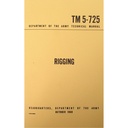
Brass knuckles for sale aren’t the only serious gear in your kit—this field-standard Army rigging guidebook earns its space the same way: clarity, durability, and straight answers. This 1968 reprint covers wire rope, chain, fiber rope, knots, hitches, splices, and fast safe-load calculations, laid out for real shop floors and field crews. The signal-yellow softcover doesn’t disappear on a crowded bench, and the military technical layout reads like a veteran rigger talking you through each decision.
Brass Knuckles For Sale Buyers Respect Real Manuals Too
If you’re the kind of person searching for brass knuckles for sale, you already live in the world of serious tools and clear decisions. This 1968 Field-Standard Army Rigging Guidebook - Signal Yellow belongs in that same world. It’s a straight, no-frills reprint of U.S. Army Technical Manual TM 5-725, built for crews who move steel, hang weight, and don’t have patience for guesswork.
This isn’t coffee-table decor. It’s a working rigging manual: wire rope, chains, fiber rope, knots, hitches, splices, and quick safe-load calculations, laid out in language that assumes you’re an adult who needs facts, not fluff. The signal-yellow cover is there for one reason—so it stands out on a bench, truck dash, or gang box when you actually need it.
Why A 1968 Army Rigging Manual Still Matters
Collectors who buy brass knuckles and other hard-use gear know one thing: proven standards age well. This 1968 reprint comes from a time when manuals were written for people who didn’t have the option of being wrong. When you were slinging weight with wire rope and chain, the numbers were either right or somebody paid for it.
That’s the value here. You’re getting the original Army rigging doctrine, distilled into a format built for the field. No buzzwords, no corporate PR. Just line drawings, tables, and clear step-by-step rigging practices that still hold up in modern shops and yards.
Material, Build, And Layout: A Manual Built To Be Used
A lot of modern books are designed to look good in a product photo. This one is designed to be found, opened, and abused. The signal-yellow softcover is high-visibility for a reason: you can spot it across a noisy jobsite or in the back of a truck without thinking.
Softcover Built For Shop Floors
The softcover binding makes it easy to throw in a tool bag or lay flat across a bench while you’re checking a table or sketching a rigging plan. The matte finish cuts glare under harsh shop lighting or daylight on a site.
Military Technical Layout That Reads Fast
The interior follows the classic Army technical manual style: all-caps headings, clear sections, line-based diagrams, and dense but readable tables. It’s structured for quick reference, not for long literary reading sessions. You open it, get the number, knot, or hitch you need, and get back to work.
Collector Appeal: Historical Rigging Standard In Your Hands
If you collect brass knuckles, knives, or other hardware with real history, this manual sits in that same lane—functional, grounded, and time-stamped. October 1968 on the cover isn’t nostalgia; it’s context. You’re holding the rigging standard that trained a generation of Army engineers, riggers, and construction units.
TM 5-725: The Designation That Means Something
The TM 5-725 mark on the cover is more than a code. It ties this field-proven rigging guide directly to the "Headquarters, Department of the Army" imprint. That’s traceable doctrine, not some generic workshop pamphlet. For collectors, that technical lineage matters every bit as much as a maker’s mark on a solid brass set.
From Training Rooms To Real-World Lifts
This reprint fits three worlds cleanly: training rooms teaching new hands how to think about load paths, shop floors where crew leads want one shared reference, and field rigs where decisions happen under time pressure. It’s the sort of manual that ends up stained, dog-eared, and still getting used—exactly where good reference belongs.
Legal Context: Manuals Are Straightforward, Your Other Gear Should Be Too
Unlike brass knuckles for sale, which walk a different legal line depending on your state, this rigging manual is simple: it’s a book. You can buy it, carry it, ship it, and use it in any state without second-guessing anything. No restrictions, no gray areas. Just printed paper with clear rigging standards.
That’s one reason serious buyers pair this kind of manual with their other gear. If you already pay attention to state-by-state legality when you buy brass knuckles or other hardware, you understand the value of owning something that’s pure reference—something you can hand a crew, a trainee, or a fellow collector without a second thought.
Questions About Brass Knuckles For Sale
Are brass knuckles legal to buy?
In the U.S., brass knuckles sit in that patchwork zone the law loves: legal in some states, restricted or banned in others. In states like Texas and Arizona, you can generally buy brass knuckles legally. In others, possession, carry, or sale can be criminalized outright or shoved into vague “dangerous weapon” language. If you’re searching for brass knuckles for sale, you already know the drill—check your specific state and local statutes, especially on carry and concealed carry.
This manual is different. It’s just a rigging book. You can buy it in any state without worrying about weapon classifications, carry restrictions, or import rules. It ships and sits on your shelf, in your truck, or on the shop table without legal drama.
What material are quality brass knuckles made from?
Quality brass knuckles are typically made from solid brass, steel, or aluminum—not pot-metal junk. Solid brass knuckles carry weight and impact, steel brings strength and slimmer profiles, and good aluminum gives you a lighter, faster feel without going toy-light. Collectors look for clean machining, consistent edges, and a finish that won’t crumble with use.
Same logic applies to rigging: you trust real metal, real ratings, and real standards—exactly the mindset this 1968 rigging manual was built to serve.
What should I look for when buying brass knuckles?
When you buy brass knuckles, you look at three things: legal status in your state, material quality, and design. If they’re not clearly legal where you live, they’re a liability. If they’re not made from solid brass, steel, or solid aluminum with clean machining and proper finger geometry, they’re junk. And if the design doesn’t fit your hand and intent—collector display, training, or personal defense—they’re just clutter.
The same mindset that drives you to check working load limits, rigging angles, and hitch types is what makes this Army rigging guide worth owning. Clear information, no nonsense, no surprises.
Why This Manual Belongs Next To Your Hard Gear
If you’re the buyer who searches for the best brass knuckles for sale and actually reads the details, you’re the buyer this manual respects. The Field-Standard Army Rigging Guidebook - Signal Yellow is built the same way your favorite tools are: simple, durable, and honest about what it does.
You get a high-visibility softcover that won’t disappear, a 1968 Army technical backbone that still pulls its weight, and a layout that serves crews who don’t have time to guess. Pair it with your other serious gear and you’ve got something most people never bother with: a written standard you can actually trust.
If you want more than marketing noise and you’d rather own the manual that trained real riggers, this is the piece you put on the bench and keep there. When the lift matters, when the numbers have to be right, this guidebook earns its spot—quietly, the way good tools always do.