Desert Scout 7-Strand Survival Paracord - Desert Tan
7 sold in last 24 hours
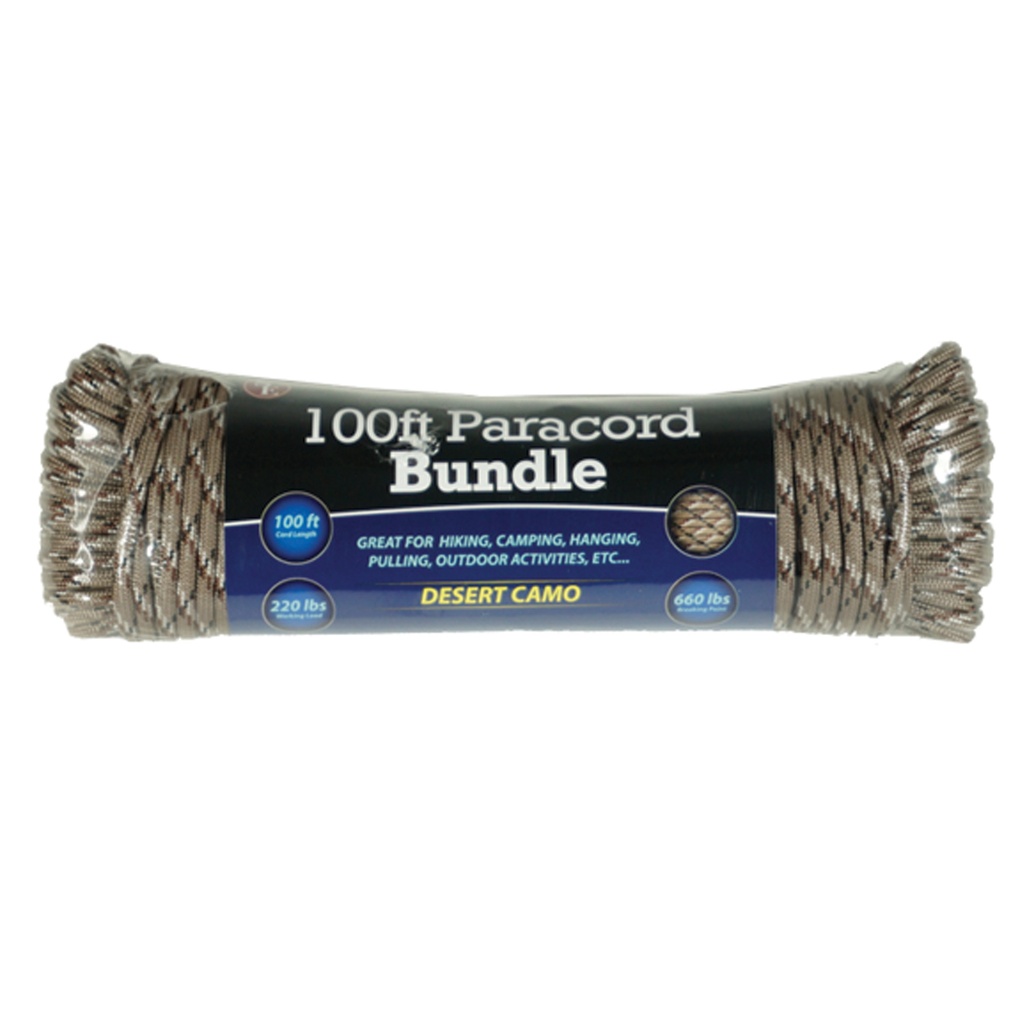
Desert Scout 7-Strand Survival Paracord is built for people who actually use their gear. This 100 ft desert tan camo line runs 7 inner strands inside a smooth woven sheath, with a 220 lb working load and 660 lb break strength that doesn’t bluff. The 5/32" diameter feeds clean through hardware, knots tight, and holds under tension. It disappears into desert and dry-country terrain and earns its spot in a pack, glovebox, or go bag without needing a sales pitch.
Desert Scout Paracord: Built For Real Work, Not Packaging
Desert Scout 7-Strand Survival Paracord is exactly what it looks like: 100 feet of desert-tan cord in a camo pattern that belongs in real kits, not on mood boards. It’s 5/32" (about 4 mm) in diameter, 7 inner strands, with a 220 lb working load and 660 lb break strength. No gimmicks, no inflated numbers — just a line that pulls, hauls, ties, lashes, and stays where you put it.
If you carry a pack, keep a go bag, or wrench on gear in dry country, this isn’t decoration. It’s the quiet problem-solver that lives in the bottom of the bag and gets used more than half the gear that costs ten times as much.
Why This Survival Paracord Earns Its Spot In Your Kit
There’s paracord-shaped string, and then there’s survival paracord you don’t have to baby. This Desert Scout bundle sits firmly in the second camp. The specs are plain and honest: 7-strand core, consistent 5/32" diameter, and a sheath that feels smooth in the hand instead of furry, cheap, or chalky.
The 220 lb working load means you can actually put this line under tension for gear tie-downs, tarp ridgelines, camp rigging, and hauling without wondering what cheap batch it came from. The 660 lb break strength is the hard stop — not a marketing fantasy — and it’s more than enough for the kind of outdoor, camping, and field work most people actually do.
7-Strand Core That Doesn’t Cut Corners
Real paracord means real guts. Inside the woven sheath you’re getting 7 distinct inner strands, not a mystery filler. Strip the sheath and you’ve got multiple usable lines for finer work — sewing torn gear, tying fishing rigs in a pinch, or lashing where you need something thinner and more flexible. That’s why people still carry this stuff long after the fads come and go: one cord, multiple options.
5/32" Diameter That Knots and Runs Clean
At 5/32" (roughly standard 550-style thickness), this survival paracord does what you expect without fighting you. It feeds clean through grommets, buckles, and cord locks. It knots tight and releases without shredding your fingers. Run it through gloved hands and it doesn’t bite or flatten out into useless ribbon the way bargain-bin cord does. You feel the density and the structure immediately.
Desert-Tan Camo That Blends In, Not Shows Off
The finish on this Desert Scout paracord wasn’t picked for Instagram — it was picked so it disappears in real terrain. The base is desert tan, cut with darker brown and black flecks in a subtle camo pattern. In scrub, rock, sand, and dry timber, it just fades into the scene. That matters when you don’t want bright neon cord slicing through your camp or broadcast across a vehicle rack.
For desert hikers, overland rigs, and anyone whose world isn’t built around pine forest green, this pattern simply makes sense. Tie down gear on a roof rack, run a tarp line off a rig, or lace it through MOLLE and it doesn’t scream for attention. It’s functional camouflage for cordage, which is exactly what it should be.
Smooth Woven Sheath, No Fluff
The sheath on this survival paracord is tightly woven and smooth. That’s not just cosmetic — it’s the difference between cord that slides over bark, metal, and fabric without snagging, and cord that fuzzes out after a couple of knots. Tight weave equals longer life, cleaner knots, and less frustration when you’re reusing the same length across trips.
Retail-Ready Hank That Actually Packs Well
The 100 ft bundle is coiled tight and even. Pull the wrapper, and you’ve still got a manageable hank instead of a snarl. Cut what you need, tie off the ends with a quick overhand, and the rest stays put in your pack, toolbox, or glovebox. Whoever wound this remembered that cord is supposed to be used, not just displayed.
Survival Paracord For People Who Don’t Call Themselves ‘Tactical’
This isn’t cosplay gear. Desert Scout 7-Strand Survival Paracord shows up when there’s work to do: hanging a bear bag, pulling a load across camp, securing a tarp in bad wind, tying off a busted exhaust hanger long enough to limp home. It’s for hikers, campers, overlanders, ranch hands, DIY fixers, and anyone who likes solving their own problems.
Use it for ridge lines, guy lines, lanyards, zipper pulls, gear repairs, lashings, drag lines, or a clean wrap on tool handles. If you’ve carried paracord before, you already know the list is endless. If you haven’t, you’re going to figure it out the first time something breaks and this is what you have on hand.
Material and Build Quality: Why This Cord Holds Up
Survival gear lives or dies on material, not slogans. This survival paracord is built around a true 7-strand core wrapped in a durable, smooth sheath with consistent tension through the whole 100 ft length. That consistency is what keeps the working load honest and the handling predictable.
The density is right in the hand: not hollow, not stiff. It bends clean around hardware, cinches down on truck beds and roof racks, and doesn’t feel like it’s going to glaze or weld itself under friction the first time you tighten it hard. If you’re used to real 7-strand survival paracord, this feels familiar in all the right ways.
Length and Strength That Make Sense Together
One hundred feet is the sweet spot. It’s enough to rig a full camp, string multiple tie-downs, or build a makeshift shelter and still have slack left, without turning into a brick of cord that eats half your pack. Coupled with the 220 lb working load, you’re not treating this as decorative cordage — it’s legit working line you can trust for realistic loads and pulls.
Questions About Brass Knuckles For Sale
Are brass knuckles legal to buy?
Brass knuckles are legal to buy in some states and heavily restricted or banned in others. In permissive states, you can buy brass knuckles outright, own them, and in some cases carry them, as long as you stay inside that state’s specific weapons laws. Other states classify brass knuckles as prohibited weapons, where possession, sale, or carry can be a criminal offense. The right move is simple: check your current state and local statutes before you purchase, and only buy brass knuckles if you live in a jurisdiction where they’re clearly legal to own. We treat brass knuckles like any other lawful collectible: you’re an adult, you know where you live, and you can read the law.
What material are quality brass knuckles made from?
Serious buyers look for brass knuckles made from solid metals: true brass, steel, aluminum, or modern alloys. Solid brass knuckles have the classic density, patina, and collector appeal; steel brass knuckles bring harder impact surfaces and edge crispness; aluminum knuckles cut weight for everyday carry and training use while still holding form. You’ll also see high-density polymer and composite designs in some collections — lighter, quieter, and less likely to print. Regardless of material, quality brass knuckles will have clean machining, proper finger hole geometry, and no flimsy casting flash or weak joints.
What should I look for when buying brass knuckles?
When you’re scanning brass knuckles for sale, start with legality in your state, then move straight to build. Prioritize solid construction, real metal or proven composite, and a finish that doesn’t scream flea market. Check thickness, weight, and how the finger holes and palm rest are shaped — they should fit the hand, not fight it. Collectors also pay attention to material (solid brass, steel, aluminum), machining quality, edge definition, and any historical or maker marks. You’re not buying a toy. You’re buying a piece of kit that either earns its keep or it doesn’t.
Why This Desert Scout Paracord Belongs Next to Your Brass Knuckles
If you’re the kind of buyer searching out brass knuckles for sale, you already understand the difference between real gear and costume props. This Desert Scout 7-Strand Survival Paracord lives in that same world — straightforward specs, honest strength, and a desert camo finish that does its job without begging for praise. Add it to the bag, glovebox, or workbench and forget about it until something breaks, slips, or needs tying down. Then it stops being cord and starts being the reason the day keeps moving.