Creek Signal Field-Ready Fixed Blade Hunting Knife - Red & Blue Pakkawood
9 sold in last 24 hours
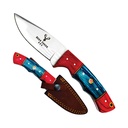
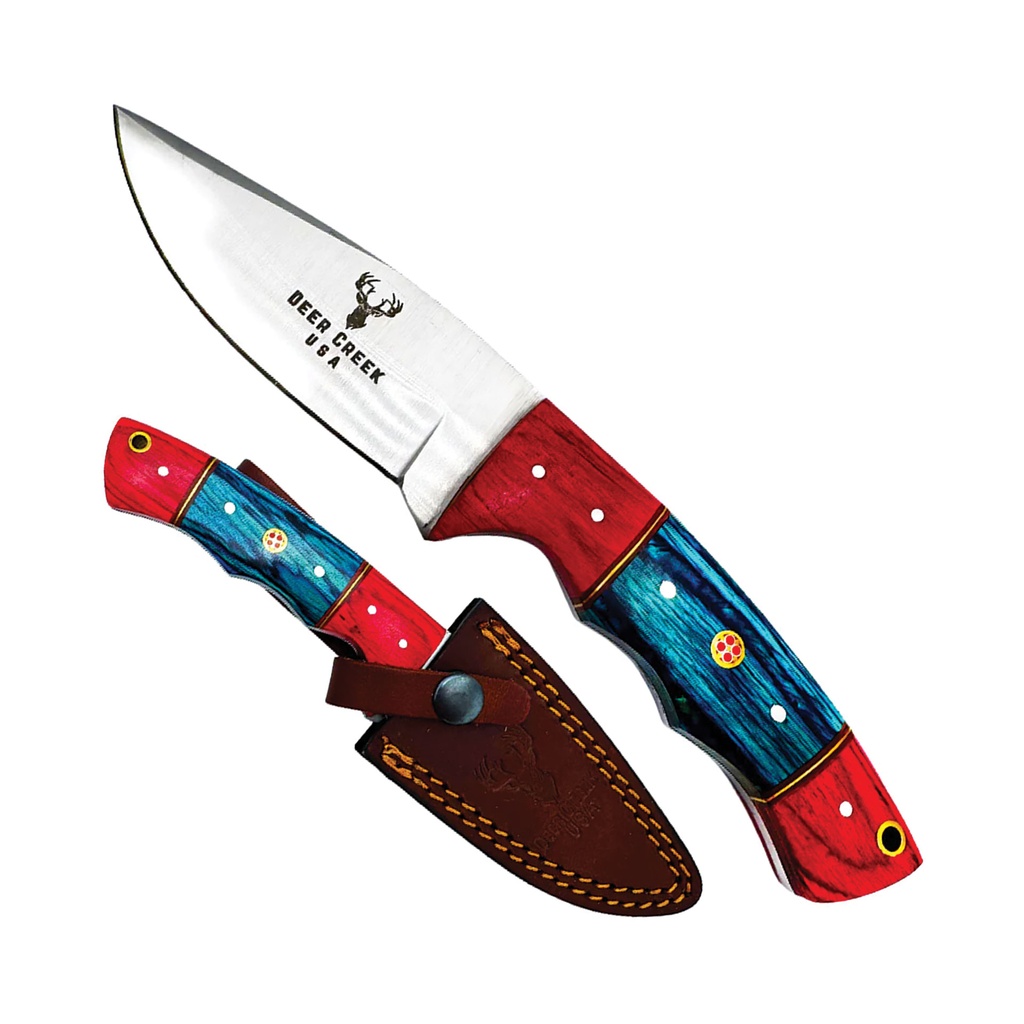
The Creek Signal is a fixed blade hunting knife built to work, not pose. A 3.75-inch stainless clip point rides on full-tang steel, backed by finger-grooved red and blue pakkawood that actually locks into your hand. At 8 inches overall and 9 ounces, it has enough weight to bite clean on game and carve at camp without feeling clumsy. The stitched leather belt sheath keeps it where it belongs: on your hip, ready when you are.
Field-Ready Fixed Blade Hunting Knife Built to Be Used
The Creek Signal Field-Ready Fixed Blade Hunting Knife is exactly what it looks like: a compact hunting knife that was made to ride your belt, see real field use, and come back looking better for it. No gimmicks, no moving parts. Just a 3.75-inch stainless clip point fixed to a full-tang spine, a red and blue pakkawood handle you can actually grip when it’s wet, and a leather sheath that carries clean on the belt.
This knife doesn’t pretend to be anything else. It’s an 8-inch, 9-ounce fixed blade hunting knife meant for game processing, camp work, and the kind of everyday cutting that happens anywhere people still do things by hand.
Built Like a Working Knife: Steel, Tang, and Edge
The Creek Signal keeps the build honest. The blade runs 3.75 inches in stainless steel with a satin finish that wipes clean easily and doesn’t glare like chrome. The clip point profile gives you a narrow, controllable tip for detail work on game while keeping enough belly to slice clean through hide and meat.
Stainless Clip Point That Actually Cuts
The stainless steel blade is ground to a plain edge, no serrations to catch or tear—just a clean cutting surface you can sharpen in the field with a stone or pocket sharpener. The satin finish is there for function as much as looks; it sheds gunk easier than bead-blast and doesn’t show every scratch the way mirror polish does.
Full-Tang Strength You Can See
Full-tang construction is visible along the spine all the way through the handle. That matters. It means the steel runs continuous from tip to lanyard hole, so when you twist, pry lightly, or bear down on a cut, you’re using the whole knife, not just a blade glued into a handle. The Creek Signal feels solid in hand because it is solid—nine ounces of steel and wood, not hollowed-out marketing.
Handle That Stays Put: Red & Blue Pakkawood with Real Grip
The handle is where this knife steps out of the crowd. Red and blue pakkawood scales are pinned to the tang with white pins and a decorative mosaic pin, giving you both color and character without turning it into a toy. Pakkawood is resin-stabilized hardwood, so it shrugs off moisture and field abuse better than bare wood while still feeling like wood, not plastic.
Finger Grooves and Lanyard-Ready Tail
Finger grooves along the handle lock your grip in when your hands are cold, wet, or bloody. The handle runs 4.25 inches, giving most hands a full four-finger hold without feeling bulky. At the butt, a lanyard hole with a contrasting ring lets you tie off cord if you want a retention loop, a drop lanyard for tree stand work, or just an easy way to yank it from a pack.
The polished handle finish doesn’t mean slick; the wood grain texture and grooves give you purchase, while the color blocking makes this knife stand out wherever you set it down—on a tailgate, at the skinning rack, or on a camp table.
Leather Sheath That Rides the Belt Without Drama
A fixed blade hunting knife is only as useful as its carry, and the Creek Signal shows up with a real sheath, not an afterthought. The brown leather sheath uses contrast yellow stitching and a snap-retention strap that locks over the handle. It threads onto a belt via a simple loop, so you don’t have plastic rattle or weird angles to fight.
The leather breaks in with use, molding around the knife and smoothing out at the edges the way good leather does. It’s the kind of sheath you don’t think about once it’s on—exactly what you want from something that’s supposed to carry a tool, not a personality.
Why This Fixed Blade Hunting Knife Earns a Spot in Your Kit
There are plenty of fixed blade hunting knives in this size range. The Creek Signal earns its keep by getting the basics right and then giving you a handle you’ll actually enjoy looking at. The deer head logo etched on the blade ties it squarely to traditional North American hunting culture—no tacticool cosplay, just a nod to what this knife is for.
At 8 inches overall and an honest 9 ounces, it balances stout and manageable. It’s long enough to open and dress deer, hogs, or similar game, but compact enough to handle fine work and carry daily around camp or on the property. If you want a fixed blade that feels like a field tool, not a wall hanger, this one speaks your language.
Questions About Brass Knuckles For Sale
Are brass knuckles legal to buy?
Brass knuckles are legal to buy in some U.S. states and tightly restricted or outright banned in others. Legality usually turns on two things: simple possession versus carry, and whether the item is considered a weapon under that state’s statute. States like Texas and Oklahoma have loosened laws and allow brass knuckles, while many states in the Northeast and West Coast still treat them as prohibited weapons. Before you buy brass knuckles online, you check your specific state and local law—penal code, weapons statute, or similar—so you know exactly where you stand on possession, carry, and intent.
What material are quality brass knuckles made from?
Serious collectors look for brass knuckles made from solid brass, steel, or high-grade alloy—not pot metal or cheap cast junk. Solid brass knuckles have the classic weight, patina, and presence that built the category in the first place. Steel brass knuckles and hardened alloys offer higher strength and can be finished in black, satin, or coated colors. The same way a good fixed blade hunting knife relies on full-tang construction and real steel, the best brass knuckles for sale are machined or cast cleanly, with smooth edges where they should be smooth and crisp lines where structure matters.
What should I look for when buying brass knuckles?
When you buy brass knuckles, you pay attention to four things: legality, material, machining, and size. First, confirm you’re in a state where brass knuckles are legal to buy and possess. Then look for solid brass or steel, not zinc filler. Check machining around the finger holes and edges—no sharp casting seams, no sloppy voids. Finally, make sure the dimensions fit your hand; knuckles that are too tight or too loose are dead weight. The same collector eye that picks out a well-built hunting knife applies here: real metal, clean work, and a piece that feels right as soon as you pick it up.
Ready to Put This Fixed Blade to Work
The Creek Signal Field-Ready Fixed Blade Hunting Knife is the kind of knife that ends up on your belt more days than not. Stainless clip point, full-tang strength, pakkawood you can spot from across camp, and a leather sheath that just does its job. If you care about tools that actually earn their keep, this one belongs in your line-up.
| Blade Length (inches) | 3.75 |
| Overall Length (inches) | 8 |
| Weight (oz.) | 9 |
| Blade Color | Silver |
| Blade Finish | Satin |
| Blade Style | Clip Point |
| Blade Edge | Plain |
| Blade Material | Stainless Steel |
| Handle Finish | Polished |
| Handle Material | Pakkawood |
| Theme | None |
| Handle Length (inches) | 4.25 |
| Tang Type | Full |
| Pommel/Butt Cap | Lanyard Hole |
| Carry Method | Belt Loop |
| Sheath/Holster | Leather Sheath |