Cold War Guerrilla Doctrine Field Manual - Yellow Cover
12 sold in last 24 hours
This is the 1961 U.S. Army FM 31-21, the Cold War guerrilla warfare and Special Forces field manual, reprinted clean and sharp. No fluff, just doctrine: organization, control, logistics, intelligence, communications, and area command laid out in plain language. The bold yellow softcover stands out on any shelf and signals exactly what it is—official unconventional warfare thinking from the era that defined it. Ideal for instructors, tactical readers, and collectors who prefer source material over opinions.
Cold War Guerrilla Doctrine Field Manual – Built For People Who Actually Read Manuals
This isn’t a coffee-table prop. The Cold War Guerrilla Doctrine Field Manual - Yellow Cover is a straight reprint of the 1961 U.S. Army FM 31-21: Guerrilla Warfare and Special Forces Operations. If you want opinions, the internet is full of them. If you want the actual doctrine that shaped modern unconventional warfare thinking, you start here and you read the thing cover to cover.
Printed as a no-nonsense softcover field book, this manual keeps the original structure: fundamentals, organization, control, logistics, intelligence, communications, and area command. It’s built for instructors, serious readers, and collectors who know the difference between theory and source material.
Brass Knuckles For Sale Buyers, Meet The Manual Behind The Mindset
If you’re the kind of person searching brass knuckles for sale, you’re not looking for training wheels. You’re looking for gear and information that comes from a real culture, with real history behind it. This Special Forces field manual is from the same world: Cold War, hard lessons, and doctrine written by people who expected their words to be tested in the field, not debated online.
Pairing hard-use gear with hard-line doctrine is how serious buyers build a collection that actually means something. This book doesn’t apologize for what it is, and neither do you for what you buy.
Material And Build: A Field Manual, Not A Novelty
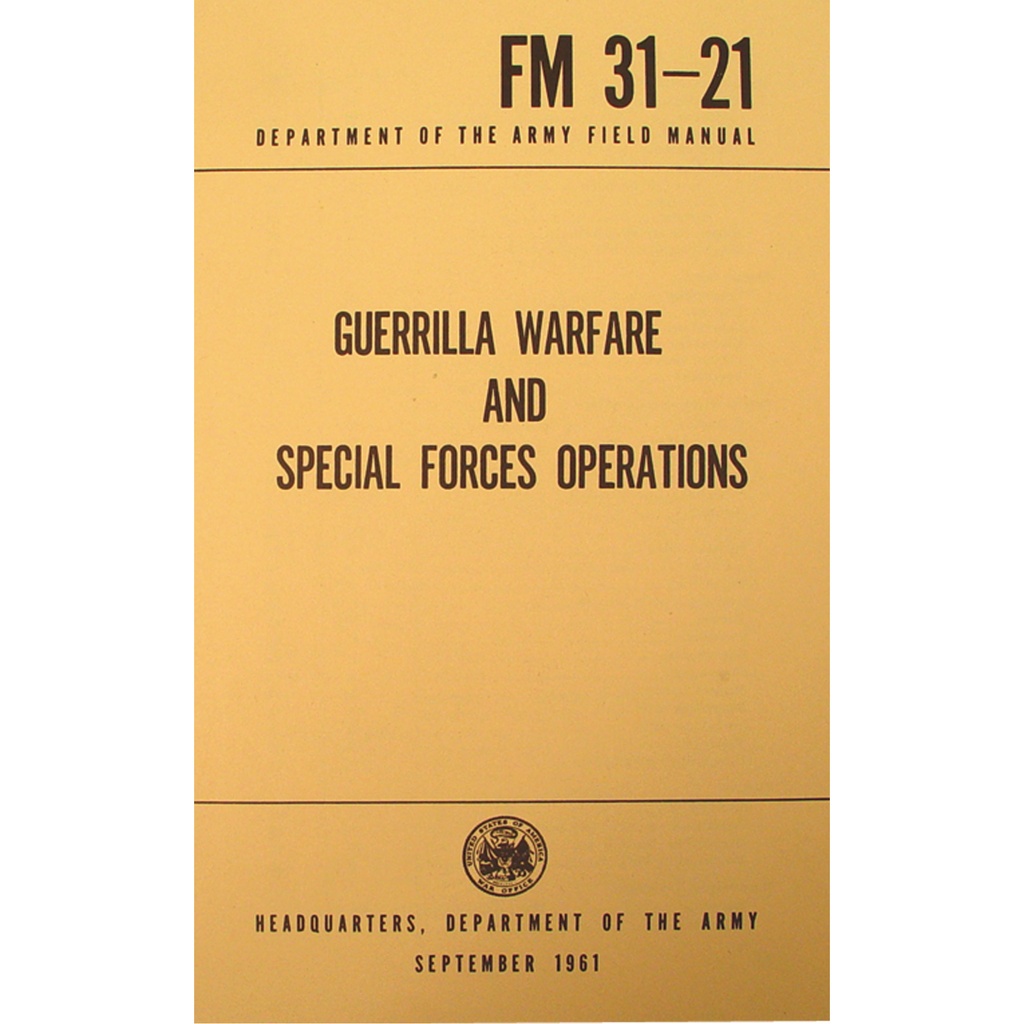
This is a softcover field manual with a bold yellow cover and black text, built to be handled, referenced, and thumbed through, not coddled. The matte finish keeps glare down under bright light. The tall, rectangular format sits flat on a bench, loading table, or classroom desk without fighting you.
Matte Yellow Cover For Instant Visual Authority
The yellow cover isn’t an accident; it’s part of the original visual language of U.S. Army doctrine. Yellow background, black all-caps type, and the official U.S. Army emblem dead center—if you know manuals, you recognize the style on sight. On a shelf of tactical titles, this one jumps out without screaming. It looks institutional because it is institutional.
Softcover Binding For Real-World Use
The softcover binding is made for repeated reference. It flexes, it lies open, it takes dog-ears and margin notes. This isn’t a leather collector’s edition that lives in a glass case. It’s a working reprint of a working 1961 manual, built so you can keep it in a range bag, kit locker, or office shelf and actually use it.
Inside The Doctrine: What You Actually Get
FM 31-21, Guerrilla Warfare and Special Forces Operations, is exactly what the title says. It’s the U.S. Army putting its unconventional warfare and Special Forces doctrine on paper at the height of the Cold War. No hype, no myths, just structure.
The manual covers how to build, support, and control guerrilla forces; how Special Forces interact with indigenous resistance; how logistics, communications, and intelligence actually fit together in contested territory. It’s written in plain, institutional English—the way doctrine manuals have to be if they’re going to be used under stress.
For instructors, this is ready-made curriculum scaffolding. For collectors, it’s a snapshot of 1961 thinking, preserved intact. For anyone who takes self-defense, unconventional tactics, or military history seriously, it’s a primary source, not a paraphrase.
Legal Context: A U.S. Army Manual You Can Own Without Drama
In a world where everyone panics about optics, this book is simple: it’s a U.S. Army field manual reprint. It’s legal to own, legal to sell, and legal to put on your shelf in all fifty states. You’re buying a historical and doctrinal reference, not a restricted item.
Where brass knuckles for sale might trigger a patchwork of state laws and local quirks, this manual does not. You can stock it in your shop beside tactical gear, training tools, and collector pieces without needing a lawyer to walk you through it. It’s the calm in the middle of the legal noise—a government document turned accessible reference.
Why Serious Collectors Want This On The Same Shelf As Their Gear
Collectors who hunt down the best brass knuckles for sale don’t just chase shiny metal; they chase story, history, and context. This 1961 field manual is pure context. It captures how the U.S. military thought about unconventional warfare at a time when the Cold War was anything but theoretical.
That makes it valuable in three ways: historical, instructional, and cultural. Historically, it pins down a specific moment in doctrine. Instructionally, it breaks complex operations into digestible sections you can build real-world training around. Culturally, it represents the mindset that shaped generations of Special Forces and irregular warfare planners.
You’re not just stacking another paperback. You’re anchoring your collection with an official document that explains the thinking behind the tools and tactics you care about.
Questions About Brass Knuckles For Sale
Are brass knuckles legal to buy?
Brass knuckles are legal to buy in some U.S. states and restricted or banned in others. In states like Texas and Arizona, adults can generally buy and own brass knuckles. In places like California, New York, and Illinois, possession or carry can be criminalized. Online, many sellers will only ship brass knuckles to states where ownership is legal and will refuse orders to restricted jurisdictions. Before you buy brass knuckles, check your state and local laws—penal codes, weapons statutes, or state police guidance usually spell it out clearly.
What material are quality brass knuckles made from?
Quality brass knuckles are typically made from solid brass, steel, or high-grade alloys. Solid brass offers classic weight, corrosion resistance, and that unmistakable warm metallic feel collectors look for. Steel knuckles hit harder on durability and can be finished in black oxide, nickel, or other coatings for a more subdued or tactical look. Cheap cast pot metal and flimsy alloys may look the part but don’t deliver the weight, balance, or longevity serious buyers expect. Material and finish are the first tells of whether a piece belongs in a real collection.
What should I look for when buying brass knuckles?
When you’re scanning brass knuckles for sale, start with three things: legality, material, and build. Confirm they’re legal to own where you live. Then check for solid brass or quality steel rather than mystery metal. Look at machining, edges, symmetry of the finger holes, and the profile of the palm rest—clean lines and consistent finishing signal a proper build, not a toy. Finally, buy from a seller that doesn’t talk to you like a child and is clear about what they’re selling, where they ship, and why the piece is worth owning.
Own The Doctrine, Not Just The Gear
If you’re the type who searches out brass knuckles for sale and picks your tools with intent, this Cold War Guerrilla Doctrine Field Manual - Yellow Cover belongs on the same shelf. It’s the mindset behind the hardware, laid out in unapologetic U.S. Army language. Legal to own everywhere, easy to stock, and impossible to mistake for anything but what it is: official Special Forces and guerrilla warfare doctrine from 1961, reprinted for people who’d rather read the source than the summary.